
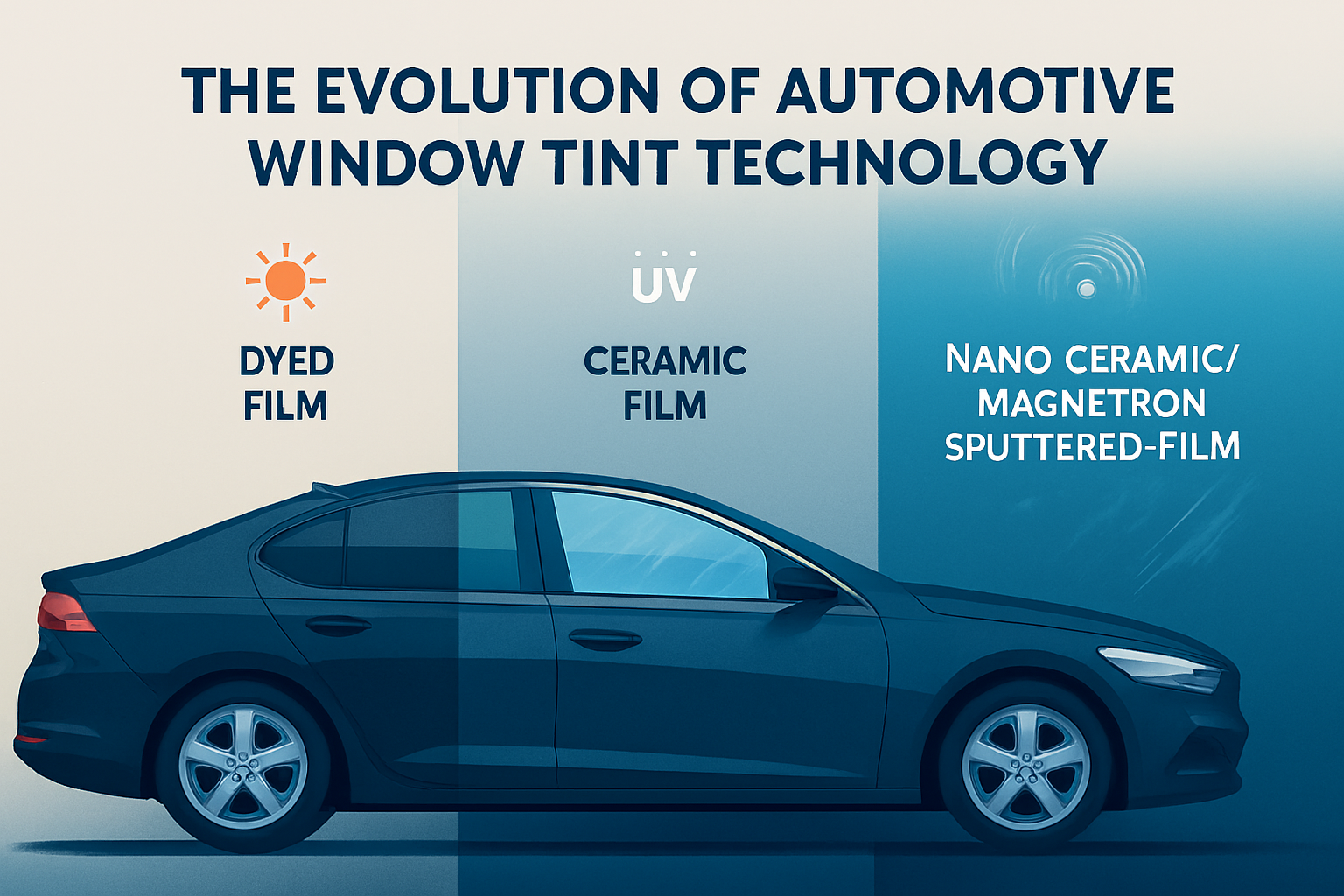
Window tinting has transformed from a simple aesthetic upgrade into a high-performance solution for heat rejection, UV protection, privacy, and signal clarity. In this article, we’ll explore the history of car window films—from early dyed layers to advanced nano-ceramic and sputtered technologies—and help you choose the right tint for your lifestyle.
A Brief History of Window Tinting
1. Dyed Films: The First Generation
Early automotive tinting relied on dyed polyester films that absorbed sunlight to reduce glare. These single-layer films were affordable and easy to install, but they had limited heat rejection and were prone to fading, bubbling, and discoloration over time.
2. Metalized Films: Reflective but Risky
To improve performance, manufacturers introduced metalized films containing microscopic metallic particles. These reflected solar energy more effectively and offered better durability. However, they often interfered with GPS, mobile signals, and keyless entry systems—making them less suitable for modern vehicles.
3. Hybrid Films: A Middle Ground
Hybrid films combined dyed and metalized layers to balance aesthetics, performance, and cost. They reduced signal interference compared to full-metalized films and offered better heat rejection than dyed-only options, but fading and reflectivity remained concerns.
4. Ceramic Films: A Game-Changer
Ceramic window tint revolutionized the industry. These films use non-metallic ceramic particles to block heat and UV rays without affecting visibility or electronic signals. Benefits include:
- Up to 50% solar heat rejection
- 99% UV protection
- No signal interference
- Superior clarity and color stability
Learn more about how ceramic films work in our in-depth guide: The True Heat Rejection Mechanism of Nano-Ceramic Window Films.
5. Nano-Ceramic Films: The Pinnacle of Tint Technology
Nano-ceramic films use ultra-fine particles for even better infrared rejection and optical clarity. They’re ideal for luxury vehicles, electric cars, and drivers who want maximum comfort and performance.
6. Magnetron Sputtered Films: Precision Engineering
Magnetron sputtering creates ultra-thin, multi-layered films with customizable optical properties. These films often combine metal and ceramic layers for optimal performance, offering:
- High heat rejection
- Low reflectivity
- Long-term durability
Sputtered films are gaining popularity in high-end automotive and architectural applications.
Who Needs What? Choosing the Right Tint
Not all window films suit every driver. Here’s a quick guide:
| Driver Type | Recommended Film | Why It Works |
|---|---|---|
| Budget-conscious commuter | Dyed or hybrid film | Affordable, basic glare and UV protection |
| Tech-savvy urban driver | Ceramic or nano-ceramic | No signal interference, great for city driving |
| Long-distance traveler | Nano-ceramic or sputtered | Superior heat rejection, comfort on long trips |
| Luxury car owner | Nano-ceramic or sputtered | Premium clarity, aesthetics, and performance |
| Electric vehicle driver | Nano-ceramic | Keeps cabin cool, reduces battery drain |
| Off-road/adventure driver | Metalized or ceramic | Durability and heat control in extreme conditions |
For more on how tint specs affect real-world performance, check out: TSER vs IRR: The Only Window Tint Spec Guide You Need .
Why Tint Matters More Than Ever
Modern window films offer more than style:
- UV Protection: Reduces skin cancer risk and prevents interior fading
- Heat Rejection: Keeps cabin cooler, reduces AC usage, improves fuel efficiency
- Glare Reduction: Enhances driving comfort and safety
- Privacy & Security: Protects valuables and personal space
In hot or humid regions, choosing the right tint can dramatically improve your driving experience.
Final Thoughts
From dyed films to nano-ceramic marvels, automotive window tinting has evolved into a sophisticated science. Whether you’re looking for budget protection or elite performance, there’s a film tailored to your lifestyle. As technology advances, expect even smarter tints—perhaps with adaptive shading or solar energy integration. For more information about how window film works, and how it can help protect our cars in the summer, check out this useful resource from International Auto Film Association (IWFA).