
Introduction
Many car owners install paint protection film expecting it to defend their vehicle from almost every type of damage. One of the most common questions is: does PPF protect against door dings?
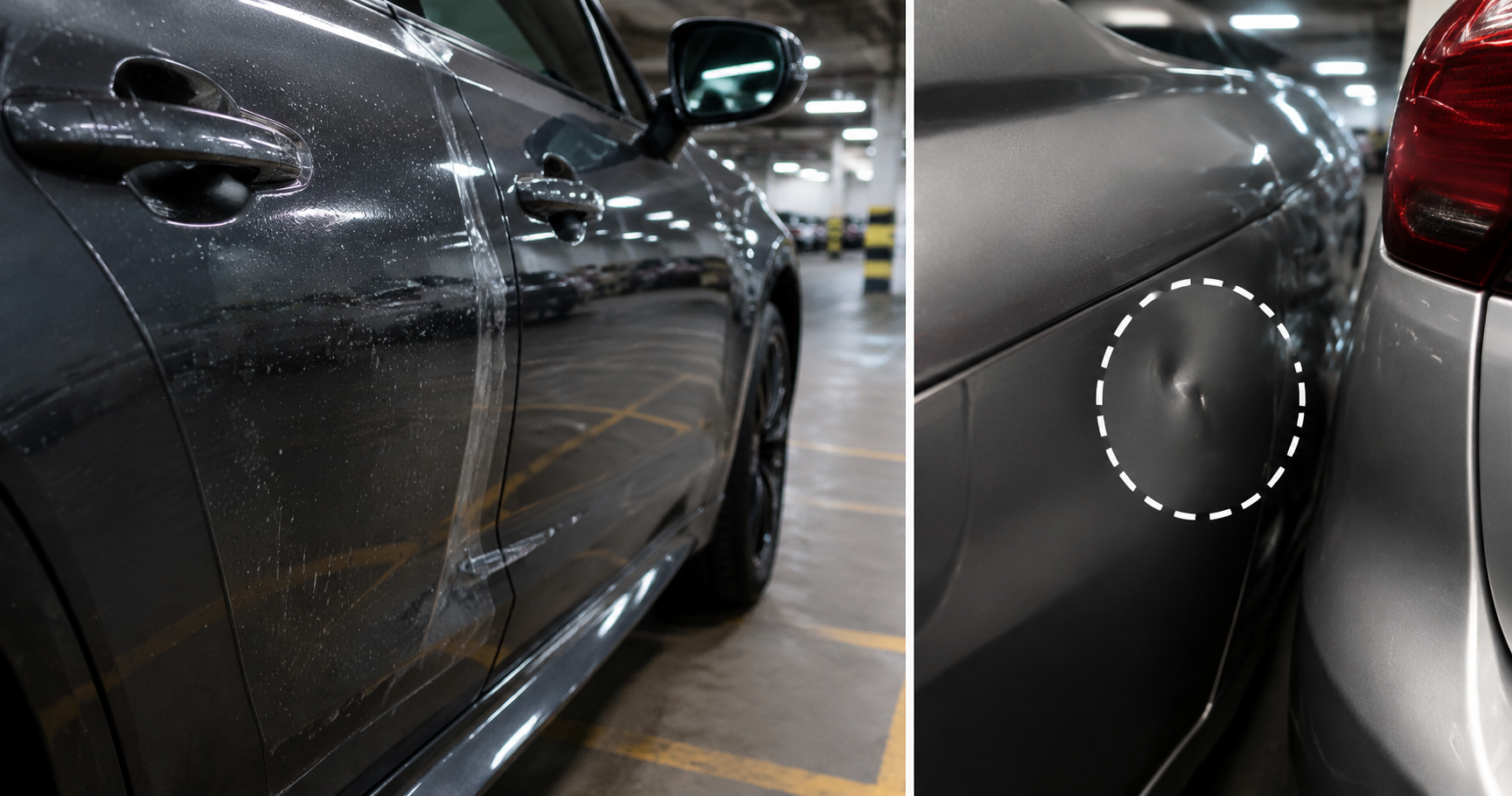
The short answer is no. Paint protection film can help protect your vehicle’s paint from scratches, stone chips, stains, and certain surface impacts, but it cannot prevent dents caused by strong physical force such as another car door hitting your vehicle in a parking lot.
PPF is designed to protect the paint surface, not the metal body panel underneath. Understanding what PPF can and cannot do helps buyers choose the right protection solution and avoid unrealistic expectations.
Actual performance varies by film type, product specification, installer quality, vehicle condition, driving environment, and local climate.
What Is Paint Protection Film Designed to Protect Against?
Paint protection film (PPF) is a transparent polyurethane-based film applied over painted vehicle surfaces. Its main purpose is to create a protective barrier between the paint and external hazards.
Modern TPU-based PPF is designed to help reduce damage from:
- Rock chips
- Road debris
- Light scratches
- Insect contamination
- Bird droppings
- Environmental stains
- Minor surface abrasions
The film absorbs some energy from small impacts and helps prevent direct contact between contaminants and the original paint.
For a deeper explanation of how self-healing PPF works, see:
However, PPF does not turn a vehicle panel into a dent-resistant surface. The metal or aluminum underneath the paint can still deform when enough force is applied.
Can PPF Prevent Door Dings?
No, PPF generally cannot prevent door dings.
A door ding happens when another vehicle’s door, shopping cart, object, or other hard item hits the body panel with enough force to create a dent. The damage occurs because the panel itself bends or moves.
PPF sits on top of the paint. It protects the finish layer but does not add enough structural strength to stop the metal underneath from changing shape.
For example:
A shopping cart lightly touching your door → PPF may help prevent scratches.
Another vehicle’s door hitting your door edge with force → PPF cannot stop the dent.
A parking lot impact that creates a crease → PPF will not prevent the body damage.
This distinction is important because some buyers confuse paint protection with body protection.
What Damage Can PPF Actually Reduce?
Although PPF cannot prevent dents, it is still highly valuable because many common vehicle damages are surface-related rather than structural.
Rock Chips
High-speed road debris is one of the biggest reasons owners install PPF. Small stones hitting the hood, bumper, mirrors, and fenders can remove paint or create visible chips.
Front-end PPF coverage is especially popular because these areas receive the most road impact.
Light Scratches
PPF can help protect against light scratches from everyday contact, such as:
- Branches brushing against the vehicle
- Fingernail marks
- Minor surface rubbing
- Improper washing contact
Self-healing PPF products may reduce the appearance of certain light scratches when exposed to heat, depending on film technology.
Learn more on BEIKAER.
Environmental Contamination
Paint can be damaged by contaminants left on the surface for extended periods.
Examples include:
- Bird droppings
- Bug residue
- Tree sap
- Road tar
- Industrial fallout
PPF creates a sacrificial layer that takes the exposure instead of the original paint.
Why Some Owners Think PPF Prevents Dents
The misunderstanding usually comes from the thickness and durability of modern PPF.
Premium TPU films feel substantial compared with traditional clear vinyl wraps. They are flexible, impact-resistant, and designed to absorb certain types of energy.
However, thickness does not equal structural reinforcement.
A protective film layer may be strong enough to resist a scratch but not strong enough to stop hundreds of pounds of force from deforming a metal panel.
This is similar to a phone screen protector. A glass protector can prevent scratches and absorb minor impacts, but it cannot guarantee that the phone screen will survive being dropped onto concrete.
PPF vs Ceramic Coating for Physical Protection
Many buyers compare PPF with ceramic coating, but they serve different purposes.
Ceramic coating creates a chemical surface layer that improves properties such as water behavior, gloss enhancement, and easier cleaning.
PPF creates a physical protective barrier.
For impact-related concerns:
PPF is better for:
- Rock chips
- Surface scratches
- Road debris
- Paint preservation
Ceramic coating is better for:
- Easier washing
- Hydrophobic performance
- Surface maintenance
Some owners combine both solutions by applying ceramic coating over PPF for easier maintenance.
More information on BEIKAER.
Can PPF Protect Against Shopping Carts?
A shopping cart impact depends on the type and force of contact.
If a cart lightly touches the vehicle and creates surface rubbing, PPF may help prevent paint scratches.
If the cart hits hard enough to dent the door panel, PPF will not stop the dent.
Parking lot damage usually has two separate problems:
- Paint damage
- Body panel damage
PPF mainly addresses the first problem.
For serious parking lot protection, owners may also consider parking strategies such as:
- Parking farther away from crowded areas
- Choosing wider spaces
- Avoiding areas with heavy shopping cart traffic
- Using dash cameras with parking monitoring features
Does Thicker PPF Prevent More Damage?
A thicker PPF may provide different protection characteristics, but thickness alone does not determine overall performance.
Film performance depends on:
- TPU material quality
- Adhesive technology
- Top coating
- Installation quality
- Product design
A poorly installed thick film may perform worse than a properly installed high-quality film.
When comparing PPF products, buyers should consider overall specifications rather than only thickness.
For TPU vs PVC film differences on BEIKAER.
What Areas Benefit Most From PPF?
Since PPF does not prevent dents, coverage should focus on areas where paint damage is most likely.
Common high-value areas include:
Front Bumper
The bumper receives constant exposure to road debris, insects, and parking contact.
Hood
The hood is one of the most common areas for rock chips.
Mirrors
Side mirrors are exposed to debris and accidental contact.
Fender Edges
Front fender areas near wheels can collect stones and road contamination.
Door Edges
While PPF cannot stop door dents, edge film can help reduce paint chips caused by everyday contact.
How to Protect Against Door Dings Instead
If your main concern is dents rather than paint damage, PPF should be combined with better parking habits.
Helpful strategies include:
- Parking away from crowded areas
- Avoiding narrow parking spaces
- Using door edge guards carefully
- Installing parking cameras
- Choosing protected parking locations
Some owners also consider paintless dent repair (PDR) after damage occurs because it can remove certain dents without repainting.
PPF and PDR solve different problems:
PPF = prevents paint damage
PDR = repairs certain dents
Is PPF Still Worth It If It Cannot Prevent Dents?
Yes, for many vehicles.
The majority of everyday paint damage comes from small impacts, scratches, contamination, and road exposure rather than major dents. PPF protects against many of these common problems.
For expensive vehicles, new cars, luxury models, EVs, and vehicles kept long-term, preserving original paint can be valuable.
The question is not whether PPF prevents every possible damage. It is whether it protects against the types of damage your vehicle is most likely to experience.
More on PPF value on BEIKAER.
FAQ
Does PPF stop door dents?
No. PPF protects the paint surface but cannot prevent dents caused by strong impacts. A door ding happens when force bends the metal or body panel underneath the paint. PPF can reduce scratches from minor contact, but it does not provide structural protection against parking lot dents, shopping carts, or heavy impacts.
Can PPF prevent scratches?
Yes, PPF can help protect against many light scratches and surface damage. It creates a protective layer over the paint that takes the damage instead of the original finish. However, deep scratches, sharp impacts, and severe damage can still penetrate the film.
Is thicker PPF better for impact protection?
Not always. Film quality, TPU material, adhesive performance, top coating, and installation quality all affect protection. Thickness is only one factor. A properly installed premium film may provide better real-world protection than a thicker but lower-quality product.
What is better for preventing car damage: PPF or ceramic coating?
PPF provides physical protection against chips, scratches, and debris. Ceramic coating improves surface maintenance and water behavior but does not provide the same impact protection. Many owners combine both because they solve different problems.
Should I install PPF on a daily driver?
PPF can be a valuable option for daily drivers, especially those exposed to highways, road debris, harsh weather, or long-term ownership. Full front PPF is often chosen because it protects the highest-risk areas without the cost of full vehicle coverage.
Conclusion
Paint protection film is one of the best ways to preserve a vehicle’s original paint, but it is important to understand its limits. PPF can protect against rock chips, scratches, stains, and everyday surface damage, but it cannot prevent door dings or body panel dents.
The best protection strategy comes from matching the product to the problem. Use PPF for paint preservation, ceramic coating for easier maintenance, and proper parking habits to reduce dent risks.
When installed correctly and maintained properly, high-quality PPF remains a valuable investment for keeping a vehicle looking newer for longer.