
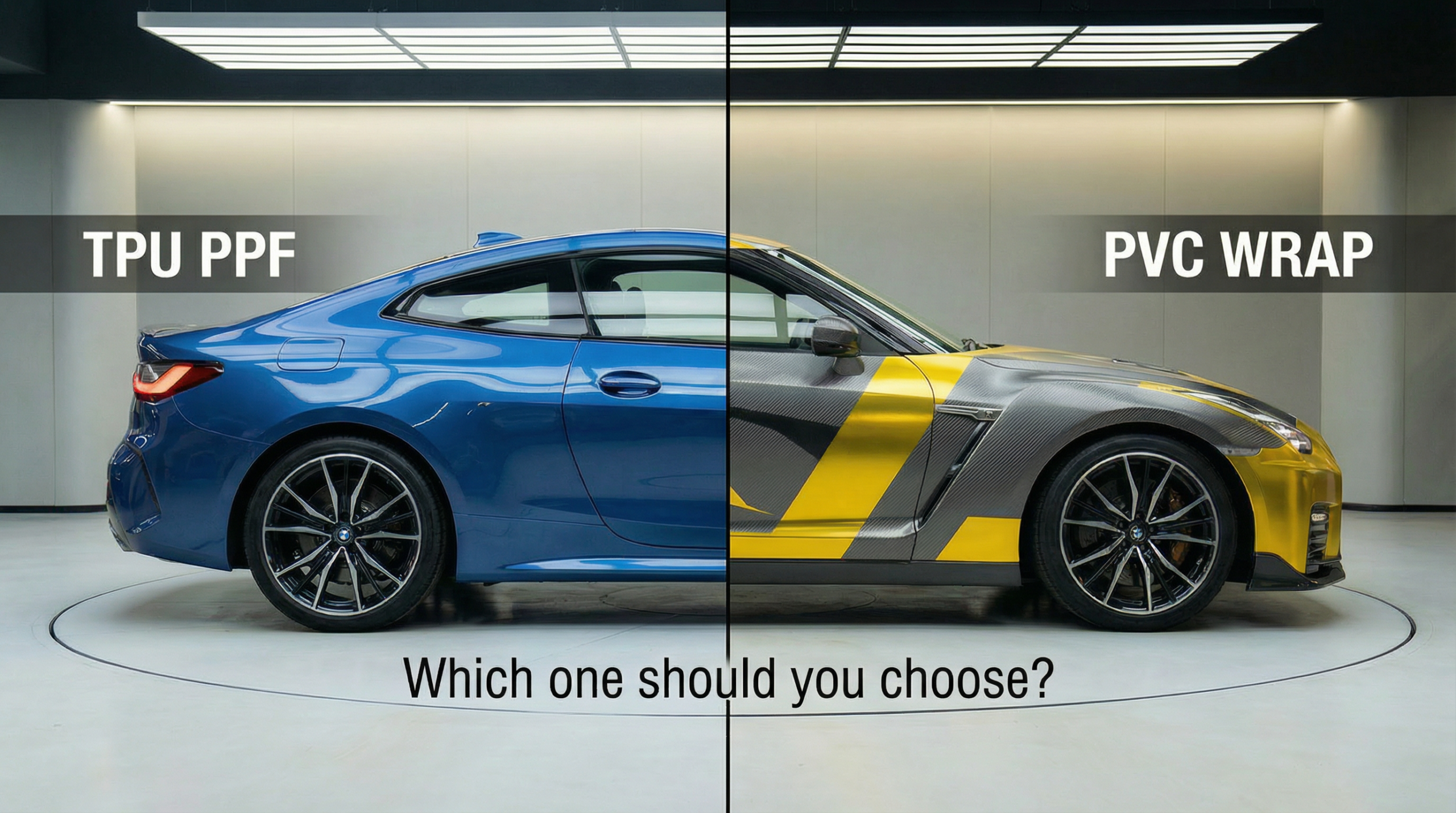
Vehicle wraps and paint protection films have evolved into more than just cosmetic upgrades—they are now strategic investments in aesthetics, durability, and resale value. Among the most popular options are PVC color change films and TPU colored paint protection films (PPF). While both can transform the look of your car, their performance, longevity, and protective qualities differ dramatically.
This article provides a deep dive into the differences, backed by industry data, and concludes with guidance on which option suits different types of car owners. Finally, we’ll highlight BeiKarR’s premium solutions that balance style and protection.
1. Material Science: PVC vs. TPU
- PVC (Polyvinyl Chloride): A traditional material used in decorative wraps. It is cost-effective and widely available, but its chemical structure makes it prone to hardening and cracking over time.
- TPU (Thermoplastic Polyurethane): Originating from invisible car paint protection technology, TPU offers elasticity, toughness, and resistance to environmental stress. Its molecular design allows self-healing when exposed to heat.
According to ClearPro’s industry report, TPU films are considered the “premium choice” due to their flexibility and self-healing properties, while PVC remains a budget-friendly decorative option (clearpro.com, 2025)
2. Durability and Lifespan
- TPU Colored PPF: Typically lasts 5–8 years, resisting yellowing and weathering.
- PVC Film: Average lifespan is 2–3 years, with higher risk of fading, edge lifting, and brittleness.
Market data shows that the global paint protection film market—dominated by TPU—was valued at USD 502.55 million in 2024 and is projected to reach USD 726.63 million by 2030, growing at a CAGR of 6.6% (grandviewresearch.com, 2025). This growth reflects consumer preference for longer-lasting TPU solutions.
3. Protective Performance
- TPU PPF: Shields against stone chips, scratches, and corrosion. XPEL’s technical data confirms TPU films achieve 99% UV rejection, ≥90% visible light transmittance, and self-healing under heat (xpel.com, 2025).
- PVC Film: Provides only basic UV protection and minor scratch resistance. Premium PVC films from 3M and Avery Dennison can last up to 4–8 years under ideal conditions, but they lack true self-healing or impact resistance (capitalwraps.com, 2025)
4. Aesthetic Options
- TPU PPF: Offers a smooth, premium finish without orange peel texture. Available in gloss, matte, and suede.
- PVC Film: Extremely diverse in colors and textures—carbon fiber, chrome, gradients—making it ideal for bold personalization.
For car enthusiasts who prioritize unique styling, PVC remains unmatched in variety. For those who want a luxury finish, TPU delivers superior surface quality.
5. Installation Experience
- TPU PPF: Requires professional installation with heat-stretch techniques. Its elasticity ensures seamless coverage but demands expertise.
- PVC Film: Easier to apply, even DIY-friendly. However, improper installation can lead to bubbles and premature peeling.
6. Environmental Impact
- TPU PPF: Non-toxic, odorless, and leaves minimal adhesive residue upon removal.
- PVC Film: Lower-quality PVC may release harmful substances under heat and often leaves glue traces when removed.
7. Cost Analysis
- TPU PPF: Higher upfront investment, but lower long-term replacement costs due to durability.
- PVC Film: Affordable, making it attractive for drivers who enjoy frequent style changes.
Avery Dennison’s SW900 PVC wraps, for instance, are priced significantly lower than TPU PPF, but their shorter lifespan means higher replacement frequency (averydennison.com, 2025).
Comparative Data Table
| Dimension | TPU Colored PPF | PVC Color Change Film |
|---|---|---|
| Lifespan | 5–8 years | 2–3 years (premium PVC up to 4–8 years) |
| UV Protection | 99% rejection (XPEL) | Basic UV resistance |
| Self-Healing | Yes | No |
| Finish Quality | Smooth, premium | Wide variety, textured |
| Installation | Professional only | DIY possible |
| Cost | High-end | Budget-friendly |
| Environmental | Eco-compliant | May release toxins |
Which Film Fits Your Lifestyle?
- TPU Colored PPF: Best for car owners who view their vehicle as a long-term investment. Ideal for luxury cars, daily drivers exposed to harsh conditions, and anyone seeking premium aesthetics with protection.
- PVC Color Change Film: Perfect for style enthusiasts who enjoy experimenting with bold looks. Suitable for budget-conscious drivers or those who change wraps every few years.
BeiKarR’s Recommendation
At BeiKarR, we manufacture and supply both TPU and PVC solutions, but our flagship TPU Colored PPF stands out for its balance of durability, protection, and aesthetics. For customers seeking frequent style changes, our PVC films deliver vibrant customization at accessible prices.
Explore our full product range at BKR Films and check related insights like TSER vs IRR: The Only Window Tint Spec Guide You Need for deeper technical knowledge.