
Introduction
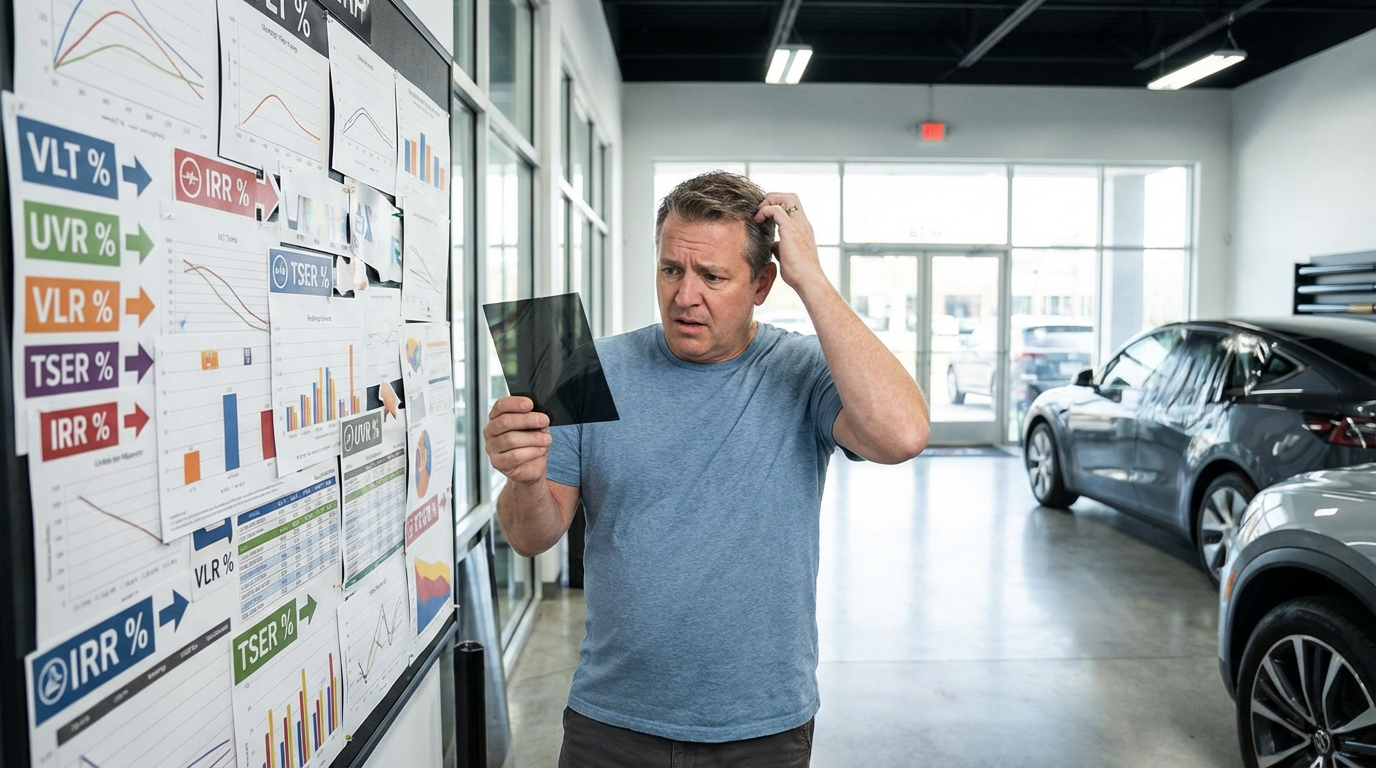
Car window films are more than cosmetic upgrades. They influence safety, comfort, energy efficiency, and even compliance with local regulations. Yet, many consumers are overwhelmed by technical acronyms—VLT, UVR, VLR, TSER, IRR—and marketing claims that often obscure the real science. This guide breaks down the essential metrics, helping drivers make informed decisions when choosing car window films.
1. Visible Light Transmission (VLT)
Definition: VLT measures the percentage of visible light that passes through the film and glass.
- High VLT (70–90%): Clearer visibility, safer for night driving, compliant with most windshield regulations.
- Low VLT (5–30%): Darker tint, more privacy, but may reduce visibility and violate local laws.
Why it matters:
- Safety: Regulations often require ≥70% VLT for front windshields.
- Comfort: Lower VLT reduces glare but can compromise visibility.
- Style: Darker films are popular for aesthetics but must balance legality.
2. Ultraviolet Rejection (UVR)
Definition: UVR indicates how much ultraviolet radiation (280–400 nm) is blocked by the film.
- High-quality films: Block ≥99% UV.
- Benefits:
- Protects skin from harmful UV exposure.
- Prevents fading and cracking of car interiors.
- Extends the lifespan of leather, plastics, and fabrics.
Authority note: The Skin Cancer Foundation endorses window films that block ≥99% UV as effective preventive measures against long-term skin damage.
3. Visible Light Reflectance (VLR)
Definition: VLR measures how much visible light is reflected off the film surface.
- Low VLR (<15%): Natural look, minimal glare.
- High VLR (>20%): Mirror-like appearance, can cause glare for other drivers.
Why it matters:
- Safety: Excessive reflectance may distract other drivers.
- Aesthetics: Some prefer reflective films for privacy, but they can look harsh.
- Regulation: Certain regions restrict high-reflectance films to avoid road hazards.
4. Safety and Explosion-Proof Performance
Beyond optical metrics, car window films can enhance safety:
- Anti-shatter properties: Films hold glass fragments together during accidents, reducing injury risk.
- Burglary resistance: Makes glass harder to break, deterring theft.
- Durability: Quality films resist bubbling, peeling, and discoloration over time.
Example: Laminated safety films are often tested to withstand impact forces, ensuring that broken glass adheres to the film instead of scattering.
5. How Metrics Work Together
No single metric defines a film’s quality. Instead, they must be considered collectively:
| Metric | Function | Ideal Range | Consumer Benefit |
|---|---|---|---|
| VLT | Light transmission | ≥70% for windshields | Safety & compliance |
| UVR | UV blocking | ≥99% | Skin & interior protection |
| VLR | Light reflectance | Reduced glare, natural look | |
| Safety | Anti-shatter | Certified | Injury prevention |
6. Material Types and Their Impact
- Dyed films: Affordable, but limited UV/IR blocking, prone to fading.
- Metallic films: Strong heat rejection, but may interfere with GPS/radio signals.
- Ceramic films: Premium option, excellent TSER, UVR, and durability without signal interference.
7. Practical Buying Guide
- Check local laws: Ensure VLT compliance.
- Ask for certified data: NFRC or equivalent lab reports.
- Balance comfort and safety: Don’t sacrifice visibility for style.
- Consider long-term durability: Cheap films often bubble or fade.
- Evaluate total performance: TSER + UVR + VLT together, not just one flashy number.
Conclusion
Car window films are complex products with multiple performance metrics. VLT ensures visibility and compliance, UVR protects health and interiors, VLR balances glare and aesthetics, and safety films prevent injuries. Together, these metrics define the true value of a film.
By understanding these terms, drivers can cut through marketing hype and choose films that deliver real-world benefits—comfort, safety, and efficiency. A well-chosen car window film is not just about style; it’s a science-backed investment in protection.
Already decided on the perfect upgrade for your car? Explore BeiKarR’s latest car wraps and paint protection film (PPF) products to keep your ride stylish and protected!
References
- 3M Malaysia – A Simple Guide to Car Window Tint Film Terms
- Daihatsu Indonesia – Types of Car Window Film & Tips for Choosing Them