
Introduction: The Hidden Pain Points of Driving in Heat
Every driver knows the discomfort of stepping into a car that feels like an oven. But beyond discomfort, excessive heat inside vehicles leads to higher fuel consumption, health risks from UV exposure, and accelerated wear on interiors. Despite these issues, many car owners still underestimate the role of heat‑rejection window films. This post explores why car window films are trending, what science and market data say, and how to choose the right solution. Already know what you are looking for? Great! Check out our new window film products at BKR Films: Car Window Film Category.
Pain Point 1: Rising Temperatures and Driver Health
- Global warming impact: Average summer temperatures in Asia and North America have risen by 1.2°C over the past decade.
- Car cabin effect: Studies show that cabin temperatures can exceed 60°C within 30 minutes of parking under the sun.
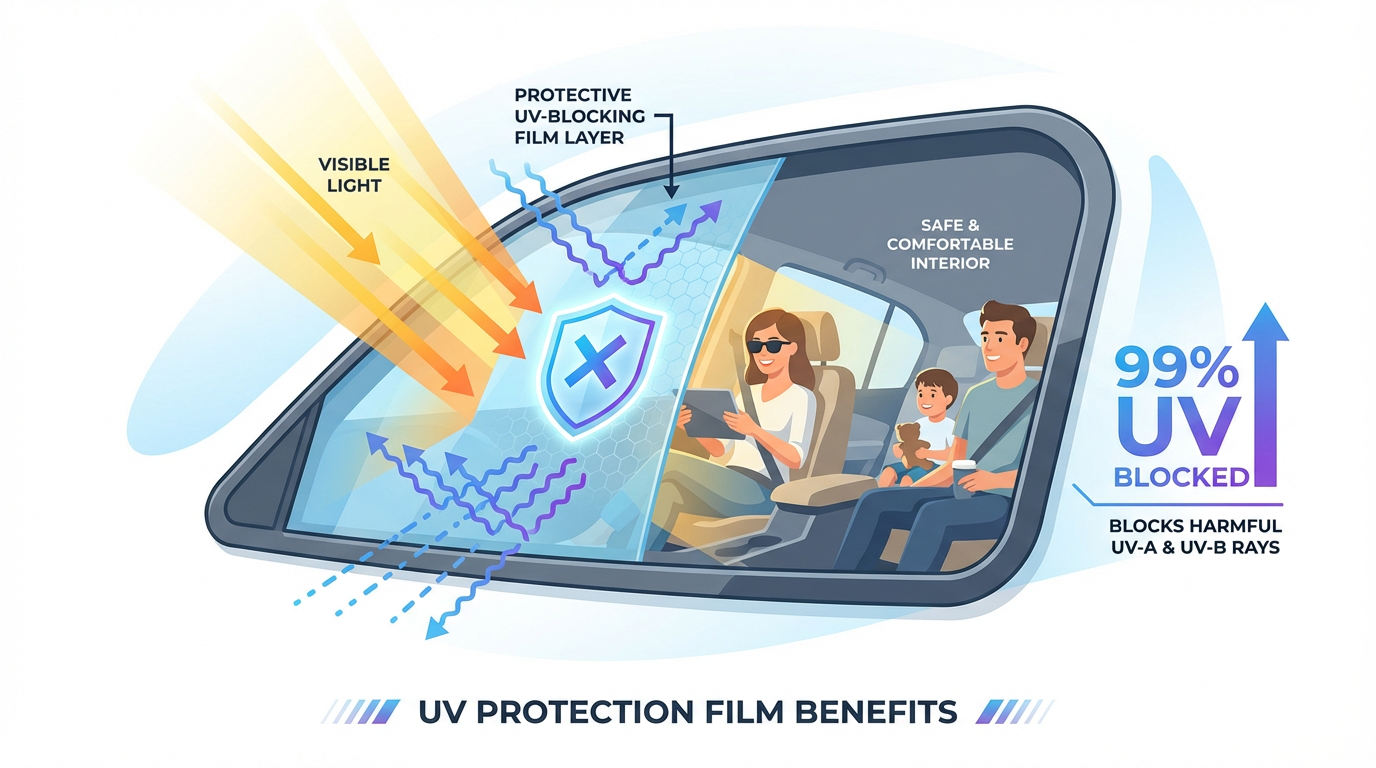
- Health risks: UV radiation penetrates untreated glass, increasing risks of skin damage and eye strain.
👉 Heat‑rejection films block up to 99% of UV rays and significantly reduce infrared radiation, lowering cabin temperatures by 10–15°C.
Pain Point 2: Fuel Consumption and Air Conditioning Costs
- Air conditioning load: Running AC at full power can increase fuel consumption by 20%.
- Economic impact: For a driver averaging 15,000 km per year, this translates to hundreds of dollars in extra fuel costs.
- Solution: Ceramic and carbon films reduce heat load, allowing AC systems to run more efficiently.
Pain Point 3: Vehicle Longevity and Resale Value
- Interior damage: Excessive heat accelerates fading of upholstery, cracking of dashboards, and deterioration of plastics.
- Resale value: Cars with well‑preserved interiors retain up to 15% higher resale value.
- Protective role: Heat‑rejection films act as a barrier, extending the lifespan of interior materials.
Market Trends: Why Heat‑Rejection Films Are Trending
According to Grand View Research: Automotive Tinting Film Market Report, the global automotive tinting film market was valued at USD 7.59 billion in 2024 and is expected to grow at a CAGR of 7.7% from 2025 to 2030. North America currently holds the largest share, but Asia Pacific is the fastest‑growing region due to rising vehicle ownership and hotter climates.
Another industry roadmap projects strong adoption of ceramic films due to their superior infrared rejection and durability. (Data Insights Market: Automotive Tinting Film Strategic Roadmap 2025-2033)
Types of Heat‑Rejection Films
| Type | Features | Pros | Cons |
|---|---|---|---|
| Dyed Films | Basic tint, absorbs heat | Affordable | Fades quickly, lower performance |
| Metalized Films | Reflective particles | Strong heat rejection | Can interfere with signals |
| Carbon Films | Non‑reflective, stable | Good IR rejection | Mid‑range cost |
| Ceramic Films | Nano‑ceramic technology | Best UV/IR rejection, durable | Higher price |
👉 Ceramic films are trending because they combine maximum comfort with signal clarity (no GPS or phone interference).
Consumer Awareness Gap
Despite the benefits, many car owners still hesitate:
- Myth: “Tinting is just for looks.”
- Reality: Modern films are engineered for performance and health protection.
- Myth: “Tinting is illegal.”
- Reality: Most regions allow tinting within specified visible light transmission (VLT) limits.
Case Study: Heat Reduction in Real Driving Conditions
A test conducted by ClearPro(ClearPro: Best Car Window Tint for Heat Reduction), compared different films:
- Untreated glass: Cabin reached 62°C in 30 minutes.
- Carbon film: Reduced cabin temp by 8°C.
- Ceramic film: Reduced cabin temp by 15°C.
How to Choose the Right Film
- Check local regulations: Ensure compliance with VLT laws.
- Prioritize UV and IR rejection: Look for films blocking 99% UV and 80%+ IR.
- Consider durability: Ceramic films last longer without fading.
- Balance cost vs. benefit: Higher upfront cost can save thousands in fuel and maintenance.
Conclusion: Why You Should Act Now
Car window heat‑rejection films are no longer a luxury—they are a necessity in hotter climates and urban driving. They address pain points of health risks, fuel costs, and vehicle longevity, while aligning with global trends in sustainability and comfort. With the market growing rapidly, now is the time to invest in a solution that protects both your health and your car.
