
Introduction
Many vehicle owners want maximum paint protection and consider combining paint protection film (PPF) with ceramic coating. But one question causes confusion: can you put PPF over ceramic coating?
In most cases, ceramic coating should not be applied before PPF installation because the coating can affect film adhesion. The preferred approach is usually to install PPF first and apply ceramic coating afterward if additional surface protection and easier maintenance are desired.
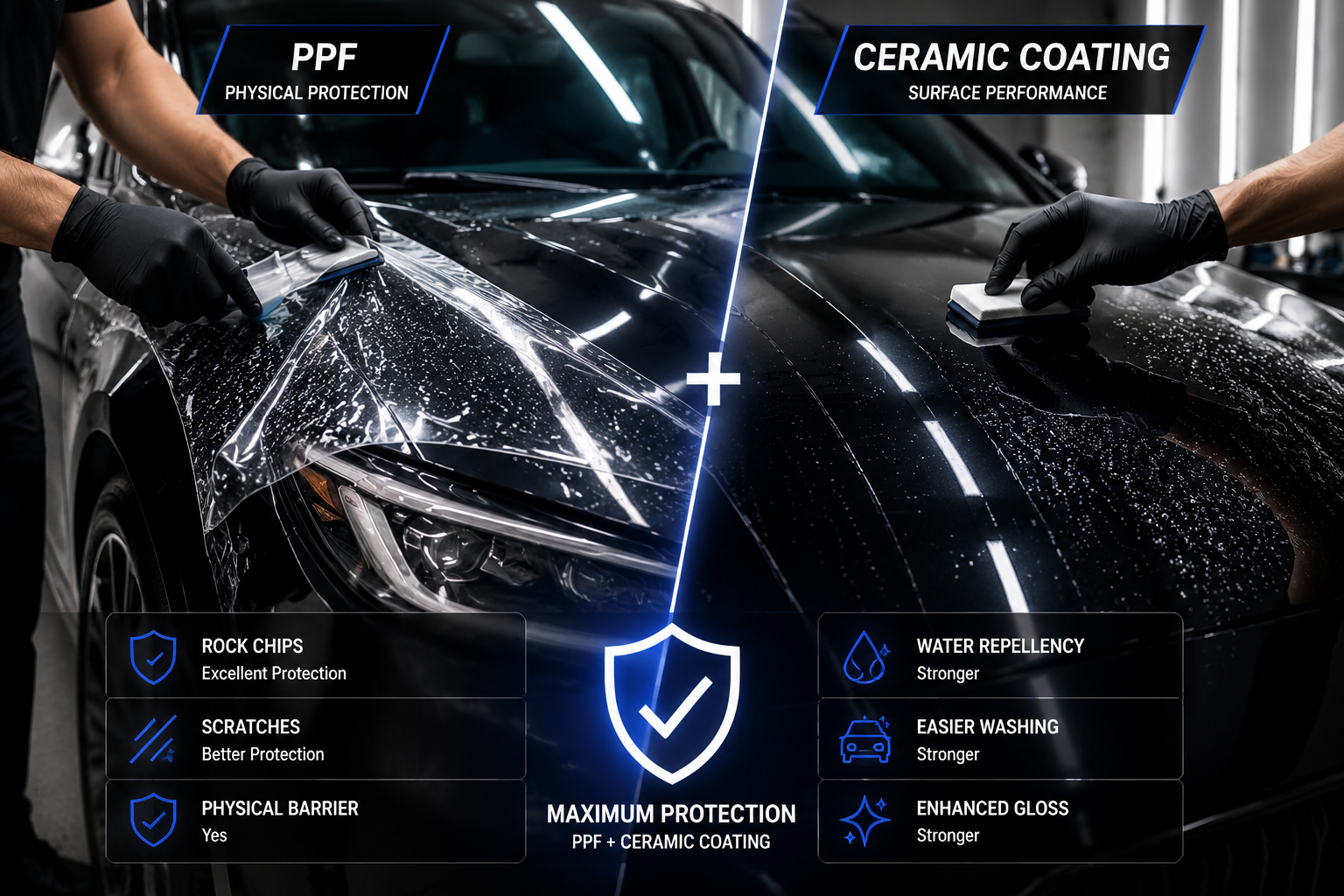
PPF and ceramic coating are not competing products. They solve different problems. PPF provides a physical protective barrier against rock chips, scratches, and road debris, while ceramic coating focuses more on surface properties such as water behavior, gloss enhancement, and easier cleaning.
The best combination depends on your vehicle, protection goals, film type, coating product, and installer recommendations.
Actual performance varies by film type, product specification, installer quality, vehicle condition, and local climate.
What Happens If You Install PPF Over Ceramic Coating?
Installing PPF over an existing ceramic coating can create adhesion problems.
PPF relies on direct contact between the film adhesive and the vehicle surface. Ceramic coating creates a chemically bonded layer over the paint, which can change the surface characteristics and reduce the ability of the PPF adhesive to properly bond.
Possible issues include:
- Reduced adhesion
- Edge lifting
- Installation difficulty
- Shorter film performance
- Increased risk of contamination under the film
This does not mean every ceramic-coated vehicle cannot receive PPF. Professional installers may inspect the surface, remove coating where necessary, and prepare the paint before installation.
However, applying PPF directly over ceramic coating without proper preparation is generally not the preferred method.
Should You Install PPF or Ceramic Coating First?
For most new vehicles, the recommended order is:
Step 1: Install PPF First
PPF should be installed directly onto properly prepared paint. This allows the adhesive to create the strongest possible bond with the surface.
Common PPF coverage areas include:
- Front bumper
- Hood
- Fenders
- Mirrors
- Rocker panels
- High-impact areas
Many owners choose front-end PPF because these areas receive the most road debris exposure.
More about PPF coverage on BEIKAER.
Step 2: Apply Ceramic Coating After PPF
After PPF installation and proper curing, ceramic coating can be applied over the film surface.
This combination may provide:
- Easier cleaning
- Improved water repellency
- Additional surface protection
- Enhanced appearance
Ceramic coating does not replace PPF. Instead, it adds another layer of maintenance protection.
Why Combine PPF and Ceramic Coating?
PPF and ceramic coating have different strengths.
PPF Protects Against Physical Damage
PPF creates a physical protective layer that helps defend against:
- Rock chips
- Road debris
- Light scratches
- Surface contamination
For more information on BEIKAER.
Ceramic Coating Improves Maintenance
Ceramic coating is mainly used to improve surface maintenance.
Benefits may include:
- Easier washing
- Better water behavior
- Reduced dirt adhesion
- Enhanced gloss
However, ceramic coating does not provide the same impact protection as PPF.
PPF vs Ceramic Coating: Which Protection Is Better?
Rock Chips
PPF: Excellent protection
Ceramic Coating: Limited protection
Scratches
PPF: Better protection
Ceramic Coating: Limited protection
Water Repellency
PPF: Moderate
Ceramic Coating: Stronger
Easier Washing
PPF: Moderate
Ceramic Coating: Stronger
Physical Barrier
PPF: Yes
Ceramic Coating: No
The two products are designed for different purposes. Many owners combine them because one protects against physical damage while the other improves maintenance.
Can You Apply Ceramic Coating Before PPF?
Technically, a vehicle with ceramic coating can still receive PPF, but proper preparation is required.
If the vehicle already has ceramic coating, installers may need to:
- Inspect the coating condition
- Remove or reduce coating layers
- Prepare the paint surface
- Ensure proper adhesive bonding
The goal is not simply making the surface clean. The goal is creating the correct bonding condition for PPF.
For new vehicles, planning protection before delivery is often easier:
- Paint inspection
- Paint correction if needed
- PPF installation
- Ceramic coating application
What About Factory Ceramic Coatings?
Some vehicles leave dealerships with paint protection products already applied.
Owners sometimes assume these coatings automatically prevent PPF installation. However, compatibility depends on the actual product and surface condition.
A professional installer should inspect the paint before applying PPF and determine whether preparation is needed.
Do not assume dealer-installed coatings are automatically compatible with PPF.
Does Ceramic Coating Make PPF Better?
Ceramic coating does not make PPF stronger, but it can improve maintenance.
With ceramic coating over PPF, owners may experience:
- Easier cleaning
- Better water behavior
- Less effort removing dirt
However, the main protection still comes from the PPF layer.
PPF protects against:
- Rock chips
- Scratches
- Road debris
Ceramic coating helps with:
- Cleaning
- Surface maintenance
- Water repellency
Common Mistakes When Combining PPF and Ceramic Coating
Applying Ceramic Coating Before PPF
This is one of the most common mistakes. Ceramic coating may interfere with PPF adhesion if the surface is not properly prepared.
Thinking Ceramic Coating Replaces PPF
Ceramic coating cannot absorb stone impacts or provide the same physical protection as PPF.
Choosing Film Based Only on Thickness
Film quality, TPU material, adhesive technology, installation skill, and maintenance habits all affect performance.
For TPU film information on BEIKAER.
Ignoring Installation Quality
Even premium products can fail if preparation and installation are poor.
How Long Should You Wait Between PPF and Ceramic Coating?
The waiting time depends on:
- PPF brand
- Adhesive system
- Ceramic coating product
- Installation environment
- Climate conditions
The film needs enough time to settle and cure before applying additional products.
Always follow the installer’s recommendations.
Is PPF Over Ceramic Coating Worth It?
For most vehicle owners, the better approach is:
PPF first → Ceramic coating second
This order allows PPF to bond correctly while still giving owners the benefits of ceramic coating afterward.
For expensive vehicles, EVs, luxury cars, and long-term ownership projects, combining both protection methods can provide a more complete solution.
For more information on BEIKAER.
FAQ
Can you put PPF over ceramic coating?
It is generally not recommended to install PPF directly over ceramic coating because the coating may interfere with adhesive bonding. The preferred order is usually PPF first, followed by ceramic coating after the film has properly cured.
Should I ceramic coat before or after PPF?
Ceramic coating is usually applied after PPF installation. PPF needs direct contact with properly prepared paint for strong adhesion.
Does ceramic coating protect better than PPF?
No. Ceramic coating and PPF protect against different types of damage. PPF provides physical protection, while ceramic coating improves surface maintenance.
Can ceramic coating damage PPF?
When the correct ceramic coating product is used and applied properly, it should not damage PPF. Always follow manufacturer recommendations.
Is PPF worth it if I already have ceramic coating?
Yes, if your goal is protecting against rock chips, scratches, and road debris. Ceramic coating alone does not provide the same physical protection as PPF.
Conclusion
PPF and ceramic coating work best when they are used for their intended purposes. PPF provides a physical shield against road hazards, while ceramic coating improves cleaning and surface maintenance.
For most vehicles, the correct order is simple:
Install PPF first, then apply ceramic coating afterward.
Planning the protection process before installation helps avoid adhesion issues and allows each product to perform properly.
Whether you choose PPF, ceramic coating, or both, professional preparation and installation quality are the most important factors for long-term results.