
An Honest Discussion (Not a Sales Pitch)
If you search online whether Paint Protection Film (PPF) is worth it, you’ll notice something strange.
- Installers say yes.
- Forums argue endlessly.
- And most blog posts quietly avoid taking a real position.
So instead of repeating technical definitions, let’s talk about what actually matters — when PPF makes sense, when it doesn’t, and why so many drivers disagree about it.
First, What Problem Are You Trying to Solve?
Most drivers don’t install PPF because they love plastic films.
They do it because they want to avoid:
- Rock chips from highway driving
- Scratches from parking lots
- Gradual paint wear that ruins resale value
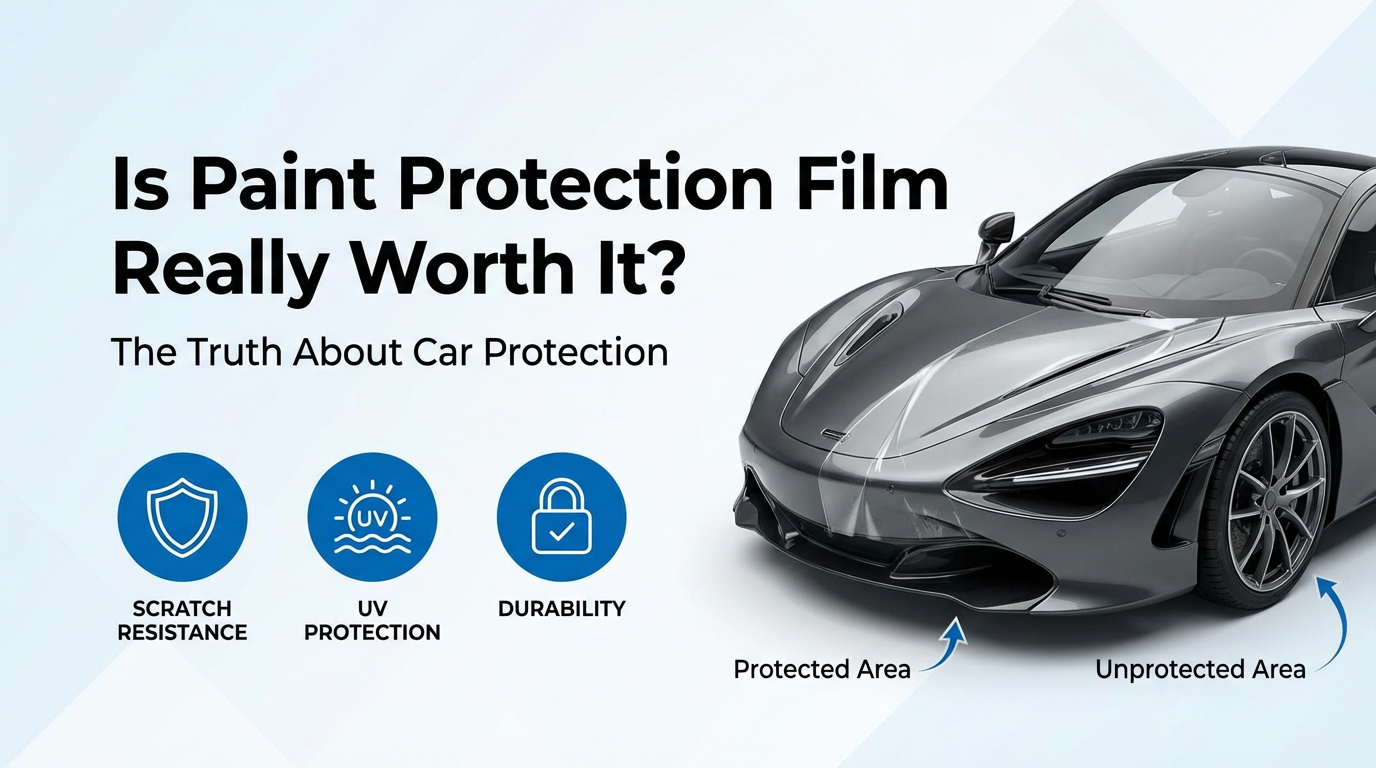
PPF is designed to protect against specific, everyday damage, not catastrophic accidents. Like a bulletproof vest, it is designed to reduce damage and protect the surface beneath. But under repeated or extreme impact, it can eventually fail, and it is not meant to offer lifetime protection without maintenance or replacement. That distinction alone explains why opinions are so divided.
If you expect PPF to make your car indestructible, you’ll be disappointed.
If you expect it to quietly reduce long-term wear, it does exactly that.
For anyone unfamiliar with the basics, a general explanation of how PPF works can be found on Wikipedia:
👉 https://en.wikipedia.org/wiki/Paint_protection_film
The Reddit Argument Everyone Knows
“I Can Repaint It for Less”
This is one of the most common objections — and it’s not completely wrong. Yes, repainting a bumper can cost less than installing premium PPF.
But repainting comes with trade-offs:
- Factory paint originality is lost
- Color matching is never perfect
- Buyers and inspectors notice repaint history
- Repairs happen after damage, not before
This is why many long-term owners choose partial PPF coverage instead of full wraps.
Front bumper, hood, mirrors — the highest impact areas.
It’s also why many customers start with front-end protection options rather than going all-in immediately.
(You can see common protection strategies discussed in our own guide here:
👉 https://bkrfilms.com/car-protection-film-tips/)
“PPF Doesn’t Stop Everything” — That’s True
PPF won’t protect against:
- Deep door dents
- Major collisions
- Heavy impacts
Any brand claiming otherwise is overselling.
What high-quality PPF does protect against is cumulative cosmetic damage — the small, annoying issues that slowly degrade paint over time.
That’s why film material matters.
Modern TPU-based films are engineered to stay flexible, resist yellowing, and maintain optical clarity under heat and UV exposure.
Lower-grade films often fail early, which is where many “PPF horror stories” come from.
If you’re exploring different protection options, you can start with an overview of our protection film lineup here:
👉 https://bkrfilms.com/
The Cost Comparison Most People Get Wrong
Most people compare:
PPF price vs. one repair bill
But damage doesn’t happen once.
It accumulates:
- Small chips
- Light scratches
- Paint correction sessions
- Touch-ups
- Resale negotiations
Individually minor. Collectively expensive. This is why many drivers say PPF feels unnecessary in the first year — and essential after several years of ownership.
When PPF Actually Makes Sense
From real-world usage patterns, PPF tends to make sense if:
- You drive highways frequently
- Your car is parked outdoors
- You plan to keep the car long-term
- You care about factory paint condition
In these cases, PPF is often paired with ceramic window film — not for appearance, but to reduce interior heat and UV exposure, slowing interior aging as well.
If you want a general explanation of how window films reduce heat and UV, this resource gives a neutral overview:
👉 https://en.wikipedia.org/wiki/Window_film
When PPF Might Be Overkill
This part is rarely discussed honestly. That is, PPF may not be worth it if:
- The car is short-term ownership
- Cosmetic wear doesn’t bother you
- The vehicle is purely utilitarian
In these situations, many drivers choose window film only — improving comfort and UV protection without heavy exterior investment.
That flexibility is why many protection setups are mixed, not all-or-nothing.
The Quiet Advantage No One Mentions
The biggest benefit of PPF isn’t how the car looks after installation. It’s how little changes over time.
No panic over scratches.
No constant polishing.
No explaining paint damage to buyers.
When installed correctly and paired with quality materials, protection films are meant to fade into ownership, not demand attention.
Final Thought (The One That Sparks Debate)
PPF isn’t mandatory. It isn’t magic. And it isn’t for everyone. But for drivers who hate watching their car slowly deteriorate, it quietly does exactly what it promises.
And that’s usually the difference between people who regret installing PPF and those who wonder why they waited so long.
